Ebook Free Introduction to Engineering Experimentation (2nd Edition)
If you have actually been able here, it means that you have the ability to kind as well as attach to the web. Once again, It implies that net becomes one of the service that can make convenience of your life. One that you can do currently in this set is likewise one part of your initiative to boost the life quality. Yeah, this website now gives the Introduction To Engineering Experimentation (2nd Edition) as one of materials to check out in this current era.
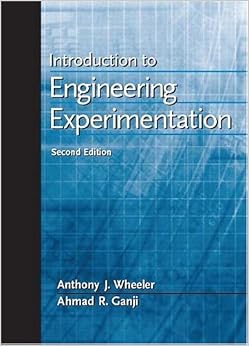
Introduction to Engineering Experimentation (2nd Edition)

Ebook Free Introduction to Engineering Experimentation (2nd Edition)
Required an assistance to find the new launched book? Don't bother! Do not assume so hard because we are constantly into aid you. Whoever you are, to find the book, from many countries, is currently very easy. Here, we have the whole lots collections of numerous types as well as categories of guides. The books are provided in soft data systems and also you can locate the link for each and every publication to download and install.
Now, we pertain to offer you the ideal brochures of publication to open. Introduction To Engineering Experimentation (2nd Edition) is just one of the composition in this world in ideal to be reading material. That's not just this book gives recommendation, but additionally it will reveal you the amazing benefits of reviewing a book. Developing your numerous minds is required; furthermore you are sort of individuals with terrific interest. So, the book is very appropriate for you.
The factors that make you must review it is the related subject to the condition that you actually desire right now. When it's mosting likely to make better chance of analysis products, it can be the method you should absorb the same ways. Yeah, the manner ins which you can enjoy the moment by reviewing Introduction To Engineering Experimentation (2nd Edition), the time that you can make use of to do excellent activity, and the moment for you to acquire what this book uses to you.
You can locate the web link that we provide in website to download and install Introduction To Engineering Experimentation (2nd Edition) By purchasing the affordable price as well as obtain completed downloading and install, you have actually completed to the initial stage to obtain this Introduction To Engineering Experimentation (2nd Edition) It will be absolutely nothing when having actually bought this publication and do nothing. Read it as well as expose it! Invest your few time to merely read some covers of web page of this book Introduction To Engineering Experimentation (2nd Edition) to review. It is soft file as well as easy to review wherever you are. Enjoy your new behavior.
From the Back Cover
Based on the authors' industrial and academic experience, this book has been developed for an undergraduate course in engineering experimentation at the junior or senior level. The book can also be a useful reference for practicing engineers. The material covers the most common elements necessary to design, execute, analyze, and document an engineering experiment or to specify instrumentation for a production process. Key Features of the Book Introduction of the common nomenclature for measuring devices and presentation of the standard method to calibrate instruments Characteristics of signal conditioners, including amplifiers and filters Description of computerized data acquisition systems Detailed discussion of the sampling rate theorem and signal analysis using Fourier series and Fourier transforms Detailed coverage of the most common statistical techniques and probability distributions Detailed coverage of the most recent standard for uncertainty analysis Descriptions of the most common engineering measuring devices Detailed coverage of the dynamic characteristics of measuring systems with practical applications Common techniques for planning and documenting experiments Extensive end-of-chapter problems based on realistic industrial practice In addition to descriptions of common instruments, the book also includes common statistical techniques, data acquisition systems, and aspects of discrete sampling.
Read more
Excerpt. © Reprinted by permission. All rights reserved.
This book is an introduction to many of the topics that an engineer needs to master in order to successfully design experiments and measurement systems. In addition to descriptions of common measurement systems, the book describes computerized data acquisition systems, common statistical techniques, experimental uncertainty analysis, and guidelines for planning and documenting experiments. It should be noted that this book is introductory in nature. Many of the subjects covered in a chapter or a few pages here are the subjects of complete books or major technical papers. Only the most common measurement systems are included—there exist many others that are used in practice. More comprehensive studies of available literature and consultation with product vendors are appropriate when engaging in a significant real-world experimental program. It is to be expected that the skills of the experimenter will be enhanced by more advanced courses in experimental and measurement systems design and practical experience. The design of an experimental or measurement system is inherently an interdisciplinary activity. For example, the instrumentation and control system of a process plant might require the skills of chemical engineers, mechanical engineers, electrical engineers, and computer engineers. Similarly, the specification of the instrumentation used to measure the earthquake response of a large structure will involve the skills of civil, electrical, and computer engineers. Based on these facts, the topics presented in this book have been selected to prepare engineering students and practicing engineers of different disciplines to design experimental projects and measurement systems. This book was conceived when a decision was made at San Francisco State University to upgrade the laboratory of our first experimental course from using primarily mechanical instruments to using electrical output devices, and to introduce the students to the acquisition and processing of the data with computer systems. The lecture was upgraded at the same time to include the new topics. A survey was made of available texts, and none was found to provide complete coverage of the material in the revised course. The primary deficiencies were in the coverage of computerized data acquisition systems, statistics, and the design and documentation of experiments. Consequently, we created a course reader, which was subsequently expanded to become this book. The book first introduces the essential general characteristics of instruments, electrical measurement systems, and computerized data acquisition systems. This introduction gives the students a foundation for the laboratory associated with the course. The theory of discretely sampled systems is introduced next. The book then moves into statistics and experimental uncertainty analysis, which are both considered central to a modern course in experimental methods. It is not anticipated that the remaining chapters will necessarily be covered either in their entirety or in the presented sequence in lectures—the instructor will select appropriate subjects. Descriptions and theory are provided for a wide variety of measurement systems. There is an extensive discussion of dynamic measurement systems with applications. Finally, guidance for planning experiments, including scheduling, cost estimation, and outlines for project proposals and reports, are presented in the last chapter. There are some subjects included in the introductory chapters that are frequently of interest, but are often not considered vital for an introductory experimental methods course. These subjects include the material on circuits using operational amplifiers (Sections 3.2.2, 3.2.5 and 3.2.6), details on various types of analog-to-digital converters (Section 4.3.3), and the material on Fourier transforms (Section 5.3). Any or all of these sections can be omitted without significant impact on the remainder of the text. The book has been designed for a semester course of up to three lectures with one laboratory per week. Depending on the time available, it is expected that only selected topics will be covered. The material covered depends on the number of lectures per week, the prior preparation of students in the area of statistics, and the scope of included design project(s). The book can serve as a reference for subsequent laboratory courses. Our introductory course in engineering experimentation is presented to all undergraduate engineers in civil, electrical, and mechanical engineering. The one-semester format includes two lectures per week and one three-hour laboratory. In our two-lecture-per-week format, the course content is broken down as follows: General aspects of measurement systems (2 lectures) Electrical output measurement systems (2 lectures) Computerized data acquisition systems (3 lectures) Fourier analysis and the sampling rate theorem (4 lectures) Statistical methods and uncertainty analysis (10 lectures) Selected measurement devices (4 lectures) Dynamic measurement systems (3 lectures) Additional measurement systems and the material on planning and documenting experiments are covered in the laboratory. The laboratory also includes an introduction to computerized data acquisition systems and applicable software; basic measurements such as temperature, pressure, and displacement; statistical analysis of data; the sampling rate theorem; and a modest design project. A subsequent laboratory-only course expands on the introductory course and includes a significant design project. There is sufficient material for a one-semester, three-lecture-per-week course even if the students have taken a prior course in statistics. Areas that can be covered in greater detail include operational amplifiers, analog-to-digital converters, spectral analysis, uncertainty analysis, measurement devices, dynamic measurements, and experiment design. In this second edition, Chapter 6 on statistics has been significantly enhanced to include the Poisson distribution, multiple and polynomial regression, outlier analysis for x-y data sets, and linear functions of random variables. Chapter 7 on uncertainty analysis has been extensively modified to make it compatible with the latest ASME standard and to provide a simpler path through the material for large data samples. Chapter 5 has been modified to include the folding diagram for predicting alias frequencies and to make the nomenclature for Fourier series consistent with common current usage. Numerous lesser alterations have been made throughout the book to clarify, update, or enhance the material. Finally, the number of homework problems has been increased by 50%.
Read more
Product details
Hardcover: 464 pages
Publisher: Prentice Hall; 2 edition (June 12, 2003)
Language: English
ISBN-10: 0130658448
ISBN-13: 978-0130658449
Product Dimensions:
7.2 x 0.9 x 9.3 inches
Shipping Weight: 1.9 pounds (View shipping rates and policies)
Average Customer Review:
3.2 out of 5 stars
22 customer reviews
Amazon Best Sellers Rank:
#990,589 in Books (See Top 100 in Books)
This is a very good textbook. Difficult to get into at first, but once you get tuned into the writing and explanations it is great. Excellent descriptive applications of the concepts and chapter problems that really make you think through the work. I would actually recommend this book over a statistics text because the chapter explanations are so much better. A true bonus that the experimental material is covered in the same text. I wish I would have held on to this book, but at the time the sale price was too attractive to pass up. If I find another copy of this some where I would re-buy it in a second.
This book was useful for two of my college courses, and it is a great reference book to have for anyone that uses any ME/EE lab equipment. Theirs a lot of material crammed into this relatively small book. Despite that this textbook is painful to read at times. I can't point out anything specific, but I hated using this book despite its useful-ness.
This textbook was required for a course. I must say I personally thought it could have been written better to support the questions at the end of the chapters.
Has good introductory topics suitable for a junior or senior level instrumentation or design course. Easy to read and follow.
The book has been easy to read, well organized, fairly succinct, and has a good load of worked example problems laced into it. It's been helpful.
This class was required for my class/lab: Experimental MethodsThis 3rd edition is very similar to the 2nd edition. If your class requires you to buy this particular book and you know someone that has the older one, then you may not need to buy it. In my class, students have the option to use both the 3rd or 2nd edition. The chapters and material seems to be the same. The only slight difference is the numbering of workout problems in the back of each chapter.This book covers a broad range of topics such as fluids, circuits, probability and statistics, thermodynamics, technical communications. Some of the explanations are very quick and hard to understand.Luckily though, there does exist a solutions manual for this book!
This is one of the best books about engineering that I have read. It shows the principles of experimentation. It also describes the equipment and its variables that an experience engineer can built its own.
The only way to understand the material was through the example problems. Many problems at the end of the chapters were unrelated and not explained in the text. Explanations were not thorough.
Introduction to Engineering Experimentation (2nd Edition) PDF
Introduction to Engineering Experimentation (2nd Edition) EPub
Introduction to Engineering Experimentation (2nd Edition) Doc
Introduction to Engineering Experimentation (2nd Edition) iBooks
Introduction to Engineering Experimentation (2nd Edition) rtf
Introduction to Engineering Experimentation (2nd Edition) Mobipocket
Introduction to Engineering Experimentation (2nd Edition) Kindle